

The bus is the cheapest way to get from Dubai to Oman — but it’s also where first-timers get caught out. Not on the road, but at the border. Between paying the UAE exit fee, keeping the right receipt, getting your Oman visa sorted, and the small detail that you actually have to get off the bus twice, the crossing is the part of the trip nobody really explains.
So that’s exactly what this guide does. We’ll cover which buses actually run the route in 2026, the documents every passenger needs, and a clear step-by-step of what happens at the Hatta – Al Wajajah border — plus when it’s worth swapping the bus for a private car with a driver.
A quick note up front: this is an honest, practical guide from GH Trips Dubai. We run private chauffeur-driven transfers rather than buses, so you’re getting the straight story on the bus option — not a sales pitch dressed up as advice.
Which Bus Actually Runs Dubai to Oman Right Now?
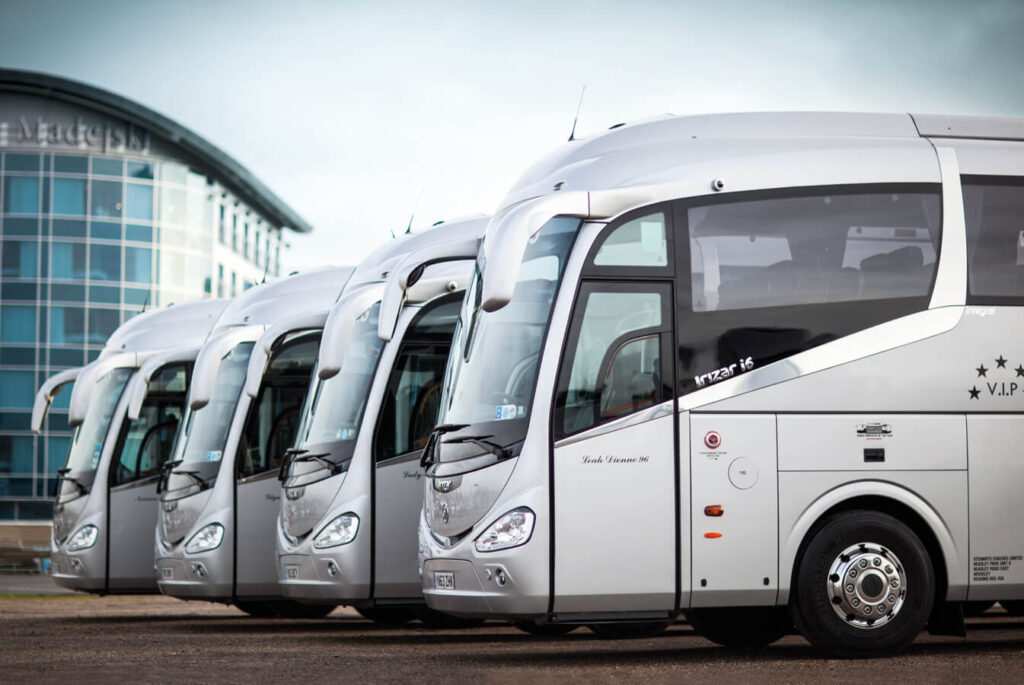
This is where a lot of online guides are out of date. For years, Dubai’s RTA ran the famous Route 201 with Oman’s Mwasalat for around AED 55. That service was suspended in early 2023 and has not resumed — so if you see the AED 55 fare quoted anywhere, ignore it.
As of 2026, your realistic options are:
- Direct from Dubai — Al Khanjry Transport: Currently the main direct Dubai–Muscat operator, at roughly AED 100 one-way (about AED 180–190 return), with around three departures a day. Boarding is near Abu Hail metro station, and tickets are bought in person at their office or over WhatsApp — there’s no online booking. The trip runs about six hours plus border time.
- From Abu Dhabi — Mwasalat Route 202: Oman’s national carrier runs a daily service from Abu Dhabi to Azaiba Bus Station in Muscat (near Muscat International Airport) for around AED 110, and you can book it online through the official Mwasalat website. The full run takes roughly 8 hours 40 minutes.
Operators, fares, and timings on this route change often, so always reconfirm directly with the bus company before you travel. Most direct buses stop at Sohar on the way to Muscat.
Documents You Need to Cross the Border by Bus
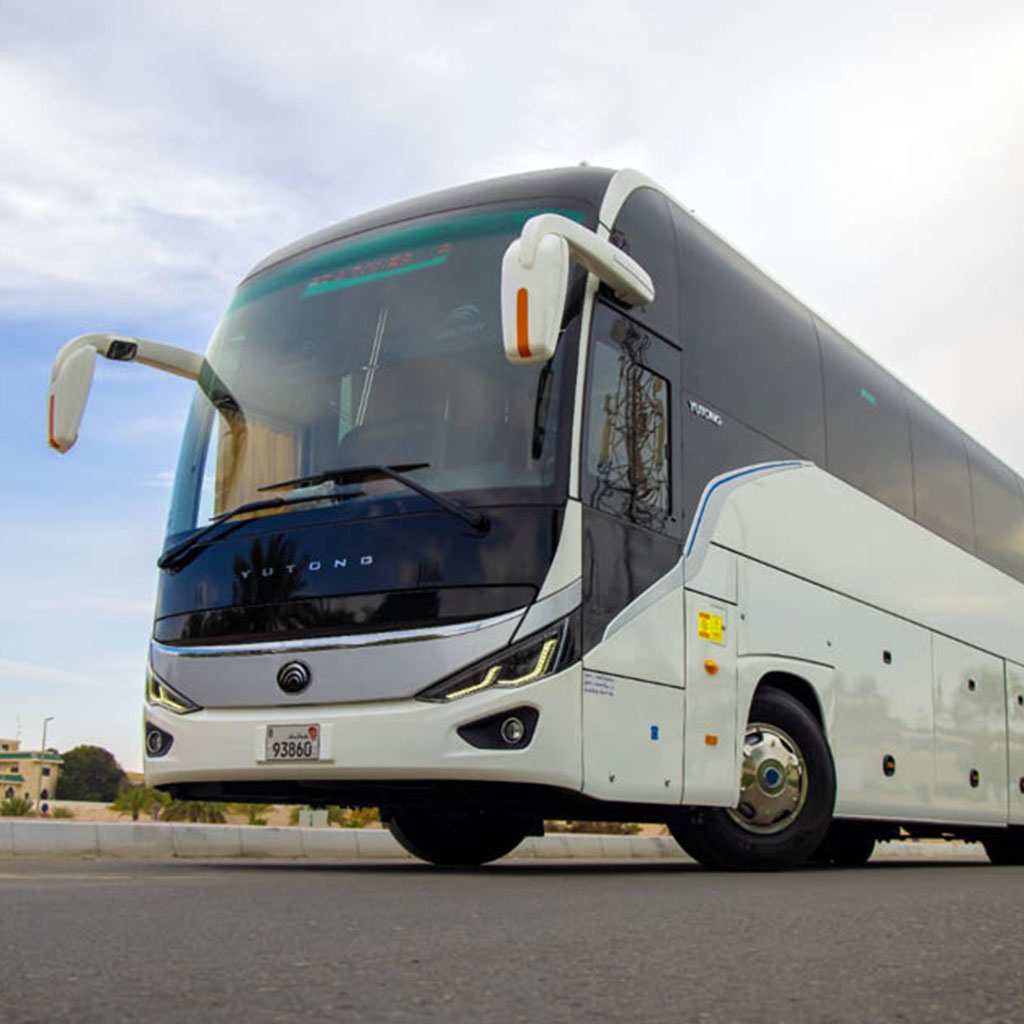
Whether you’re on the bus or in a private car, the border wants the same core documents. Get these ready before you leave — fumbling for them at the counter is what slows everyone down.
Every Passenger Needs
- A passport valid for at least six months.
- Your bus ticket (and booking confirmation if you have one).
- The AED 35 UAE exit fee, paid per person when leaving — and keep the receipt safe, because Omani officials will ask to see it.
- An Oman entry visa, or proof you’re eligible for visa-free or visa-on-arrival entry (more on that below).
If You’re a UAE Resident
- A valid Emirates ID alongside your passport.
- Residents of many nationalities qualify for an Oman visa on arrival, typically valid for around 14 days for a small fee paid in Omani rials.
If You’re a Tourist Visiting the UAE
- Your passport and, depending on nationality, a pre-arranged Oman e-visa or visa-free entry. A one-month tourist visa runs around 20 OMR (roughly AED 190) for those who need one.
- Applying for the e-visa online through the Royal Oman Police portal before you travel is the smoothest route — it saves time at the counter.
Visa rules shift periodically, so treat the official Royal Oman Police website as the source of truth, and check your specific nationality before booking.
The Border Crossing Procedure, Step by Step

Dubai–Muscat buses cross at the Hatta – Al Wajajah border. Here’s exactly what happens, so nothing surprises you:
- Arrive at the UAE exit post. The bus stops on the UAE side and everyone gets off with their hand luggage.
- Pay the UAE exit fee and get stamped out. Pay the AED 35 departure fee, have your passport stamped, and keep the receipt — you’ll need to show it on the Oman side.
- Short hop to the Oman post. The bus drives the short distance across to the Omani entry point.
- Clear Oman immigration. Everyone gets off again. Buy or present your visa, get your entry stamp, and have your passport and exit receipt ready.
- Customs and luggage check. Bags may be scanned or inspected before you reboard and continue toward Sohar and Muscat.
On a normal weekday the full border process adds about 30 to 60 minutes. On Fridays, weekends, and public holidays it can stretch to two hours, so plan your day with a buffer.
How Long Does the Whole Trip Take?
Dubai to Muscat by direct bus is roughly six hours of driving plus the border, so realistically half a day door to door. From Abu Dhabi, budget closer to nine hours including stops and the crossing. Traffic and border queues are the main variables — the driving itself is straightforward on good highways.
What to Bring (and the Onboard Realities)
A few things the ticket page won’t tell you:
- No onboard toilet. Buses stop, but not on demand — plan ahead, especially with kids.
- The AC is unpredictable. It can be cold or warm, so wear layers and pack a light jacket.
- Bring water and snacks. Stops are limited and the journey is long.
- Carry small cash in both currencies. AED for the exit fee, and some Omani rials for the visa and any purchases.
- Keep documents accessible. Passport, exit receipt, and visa proof in one pocket, not buried in a bag.
Bus vs Private Car With Driver: Which Should You Choose?
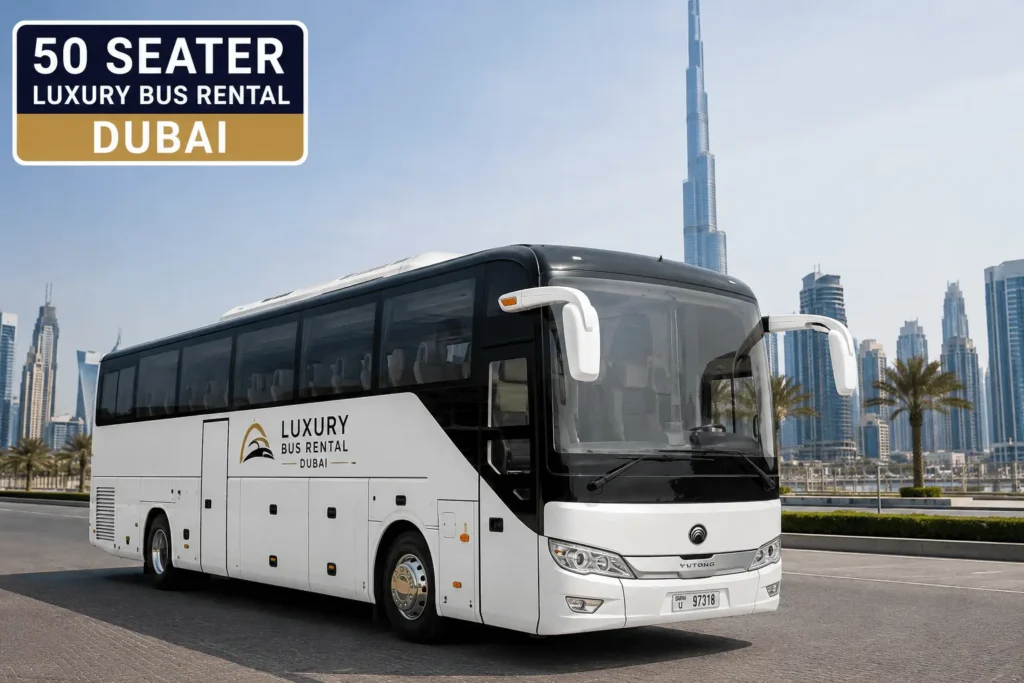
The bus does one job well — it’s cheap. But it asks a lot of you at the border and on the road. Here’s the honest comparison.
The bus works if you’re travelling solo or as a budget-minded pair, you’re flexible on timing, you don’t mind queuing through the border with 40-odd other passengers, and you’re fine with fixed departure points and no door pickup.
A private transfer makes more sense when comfort and time matter. With a private Dubai to Oman car with driver, you get door-to-door pickup, your own schedule, and a driver who guides your group through the border instead of leaving you to figure it out. The vehicle’s Oman insurance and permissions are already arranged, so the only documents you handle are your own.
It costs more than a bus seat, but for families, older travellers, business trips, or anyone connecting to a dhow cruise or a flight, it’s usually worth it. If you want the full picture on routes and timing, see our Dubai to Oman by car with driver guide and the detailed Dubai to Oman distance and route guide.
When the Bus Makes Sense — and When It Doesn’t
- Choose the bus if: you’re a solo backpacker or budget traveller, time isn’t tight, and you’re comfortable handling the border steps yourself.
- Choose a private transfer if: you’re travelling as a family or group, carrying luggage, on a schedule, or you simply want a door-to-door ride without the border stress.
Travelling as a larger group? A vehicle like the Toyota Hiace with chauffeur keeps everyone together and handles luggage comfortably — often working out reasonable per person.
Tips for a Smooth Border Crossing
- Apply for your Oman e-visa early so you’re not stuck at the counter.
- Cross early on a weekday to dodge the worst queues.
- Guard your AED 35 exit receipt — you’ll be asked for it on the Oman side.
- Reconfirm your bus timing a day before, since schedules shift.
- Keep some Omani rials handy for the visa fee and small purchases.
Frequently Asked Questions
Is there still an AED 55 RTA bus from Dubai to Oman?
No. The old RTA Route 201 with Mwasalat was suspended in early 2023 and hasn’t resumed. The current direct Dubai–Muscat bus is run by Al Khanjry Transport at around AED 100 one-way.
Do I have to get off the bus at the border?
Yes — twice. Once on the UAE side to pay the exit fee and stamp out, and again on the Oman side for your visa, entry stamp, and a customs check.
What documents do I need to cross into Oman by bus?
A passport valid for six months, your bus ticket, the AED 35 UAE exit fee receipt, and an Oman visa (visa-free, e-visa, or on arrival depending on nationality). UAE residents also need a valid Emirates ID.
How long does the border crossing take?
Usually 30 to 60 minutes on a normal weekday, but up to two hours on Fridays, weekends, and public holidays.
Can I book the Dubai to Muscat bus online?
The direct Al Khanjry service is booked in person or via WhatsApp, not online. The Mwasalat service from Abu Dhabi can be booked through the official Mwasalat website.
Is the bus or a private car better for crossing into Oman?
The bus is cheapest but rigid and hands-on at the border. A private car with driver is door-to-door, runs on your schedule, and the driver guides you through the crossing — better for families, groups, and anyone short on time.
Prefer to skip the border queues? GH Trips Dubai arranges fully-insured, chauffeur-driven cars from Dubai to Oman, door to door — we handle the vehicle paperwork and guide you through the crossing. Tell us your destination and date for a fixed quote.