

The Dubai to Salalah drive is no ordinary road trip. At well over a thousand kilometres through remote desert, often split across two days, it’s a genuine long-haul journey, and what you pack makes a real difference between a smooth, comfortable trip and an uncomfortable, under-prepared one. This isn’t a drive where you can nip to a shop if you forget something; long stretches are empty, with services few and far between. A little preparation goes a long way.
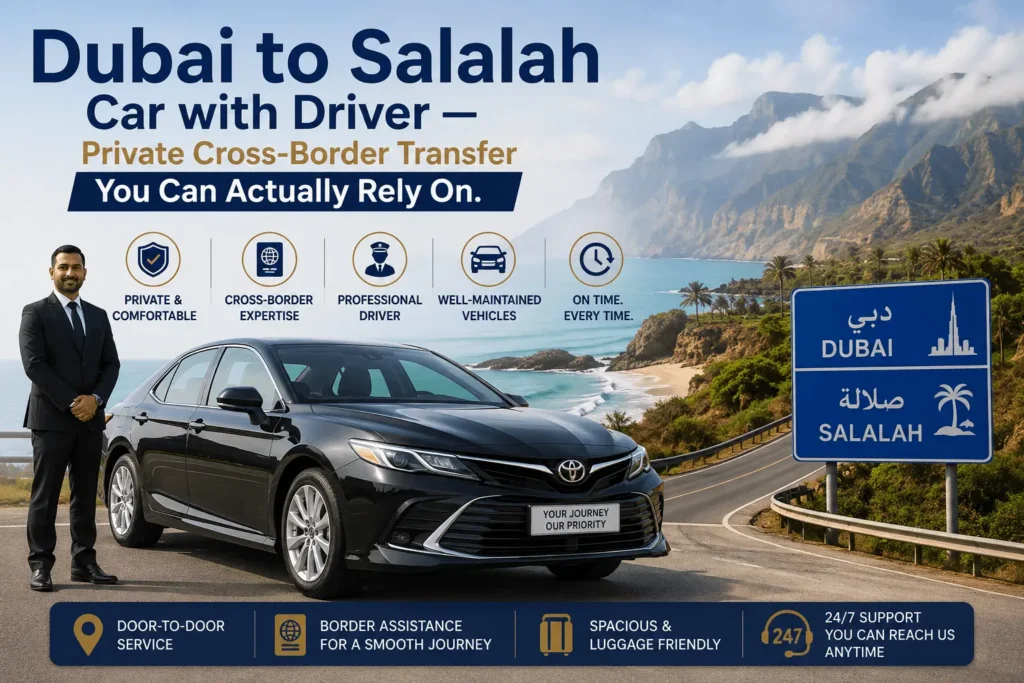
This is your complete packing checklist for the Dubai to Salalah journey: the documents to carry, food and water for the long empty stretches, clothing for the desert, the air-conditioning, the mountains, the Khareef, and Salalah’s beaches, plus car essentials, an overnight bag, and remote-area items. For the route, timing, and border detail, see our dedicated guides; this one is all about getting packed and ready. Confirm any visa requirements through official Omani channels before you go, as rules depend on nationality and can change.
Why Packing Matters More on This Drive
On a short trip, forgetting something is a minor annoyance. On the Dubai to Salalah haul, it can genuinely affect your journey. Much of the route crosses long, sparse desert where fuel, food, and shops are scarce, so you can’t rely on picking things up along the way. The drive is long enough to be tiring, so comfort items matter. And Salalah’s climate, especially in the green, wet Khareef season, is different from Dubai’s, so you’ll need clothing the rest of the Gulf doesn’t call for. Packing thoughtfully isn’t fussiness here, it’s part of a successful trip.
The Quick Checklist
The essentials at a glance, before we break them down:
- Passport (valid six-plus months) and Oman visa if required
- Plenty of water and a generous supply of snacks
- Light, modest clothing, plus layers for AC, mountains, and cooler Salalah
- Khareef gear if travelling in monsoon season: a light waterproof and quick-dry clothes
- Beach and wadi gear for Salalah: swimwear, water shoes, a towel
- Cash (Omani rials and some UAE currency), plus cards
- Phone, charger, power bank, and offline maps downloaded
- Sun protection, any medication, and a small first-aid kit
- An overnight bag if splitting the drive over two days
Documents to Carry
Keep these together and accessible for the border, not packed deep in a bag. You’ll need your passport (valid at least six months), your Oman visa or eVisa confirmation if your nationality requires one (arranged in advance through official channels), and, for UAE residents, your residence visa and Emirates ID. Bring documents for any children, and have your accommodation booking handy. If you’re self-driving, you’ll also need your vehicle and insurance paperwork, with a private driver, the vehicle documents are handled for you, so you only manage your personal ones.
Food, Water & the Long Empty Stretches
This is where the Salalah drive differs from a normal trip. Long sections, particularly the central desert stretch towards Haima and Thumrait, have very few services, so carry more water than you think you’ll need (the dry heat dehydrates you fast) and a generous stash of snacks, fruit, nuts, sandwiches, and treats to keep energy up between stops. Don’t count on finding a shop or restaurant when hunger strikes; plan your meals around the towns where services exist (Nizwa, Haima, Thumrait), and keep supplies in the car for everything in between.
Clothing: Desert, AC, Mountains & Monsoon
What to wear for the drive

Pack light, breathable fabrics like cotton for the heat, but always bring layers. Vehicle air-conditioning is strong, the early mountain stretches near Nizwa are cooler, and Salalah, especially in Khareef, is far milder than Dubai. A light jacket or fleece is essential. Remember Oman is more conservative than Dubai, so pack modest clothing (covering shoulders and knees) for towns, heritage sites, and the mosque in Salalah, and comfortable clothes for the long hours in the car.
Packing for the Khareef
If you’re travelling in the Khareef season (roughly late June to September), pack specifically for monsoon conditions, this is the one time the Gulf calls for rain gear. Bring a light, packable waterproof or rain jacket, quick-dry clothing, and footwear with good grip for wet, green, sometimes muddy trails around the waterfalls and hills. A small umbrella and a dry bag for electronics are useful too. The mist and drizzle are part of the magic, but you’ll enjoy them far more if you’re prepared for damp.
Beach and wadi gear for Salalah
Unlike a purely cultural trip, Salalah is a beach and waterfall destination, so pack accordingly: swimwear, a quick-dry towel, and water shoes (handy for rocky wadi beds and beaches), plus a beach bag. You’ll want them for the gentle beaches, the wadis, and spots like Wadi Darbat. It’s easy to forget these on what feels like a long desert drive, but they’re among the most-used items once you arrive.
Car & Journey Essentials
For the long hours on the road, keep a day bag within easy reach (not buried in the boot) with the things you’ll want en route:
- Water and snacks, topped up at every stop
- Sunglasses and a layer for the AC
- Phone, charger, and a power bank for the long day
- Entertainment for the monotonous desert stretches: downloaded music, podcasts, audiobooks, films
- Your documents in an accessible pouch for the border
- Tissues, wet wipes, and hand sanitiser
- A neck pillow and anything that helps you rest on the long legs
- A reusable water bottle to refill at stops
Money, Phones & Connectivity
Carry cash, it matters more on this route than on a city trip. You’ll want Omani rials for fuel (some remote stations may not take cards), food, entry fees, and the souq, plus a little UAE currency for the border exit fee. On connectivity, your UAE SIM may roam in Oman but charges add up, so check your plan, consider a local Omani SIM or eSim, and crucially download offline maps before you set off, mobile signal can drop on the remote desert stretches, so don’t rely on live navigation the whole way.
The Overnight Bag (for a Two-Day Trip)
Because most travellers sensibly split this drive over two days with an overnight stop (often around Nizwa), pack a small, separate overnight bag with just what you need for the night, a change of clothes, toiletries, chargers, and any medication, so you don’t have to unpack your entire luggage at the hotel. Keep it easily accessible in the car. This small step makes the overnight stop effortless and is one of the easiest ways to keep a two-day journey smooth.
Health & Remote-Area Items
Given the remoteness of much of the route, pack a few health and safety extras: any personal medication (in your day bag, not the boot), a basic first-aid kit, a motion-sickness remedy if you’re prone to it (helpful on the winding mountain sections), hand sanitiser, and tissues. Sun protection, sunglasses, a hat, and high-SPF sunscreen, is a year-round must. It’s the kind of preparation you hope not to need, but on a long, remote desert drive, it’s wise to have.
What You Can Leave Behind With a Private Driver

One of the quiet benefits of a private transfer is that it shortens your packing list. You don’t need to worry about vehicle paperwork, cross-border permits, Oman insurance, or navigation aids, the driver handles all of it, with a vehicle fully permitted for Oman. You don’t need to pack for the stress of driving 1,200-plus kilometres yourself, either. You simply bring your personal essentials and enjoy the ride, while the logistics, the route, the fuel stops, and the border are taken care of. It’s a lighter, easier way to travel a long way.
Tips for Packing Smart
- Separate a day bag and an overnight bag from your main luggage for easy access
- Pack documents and cash where you can reach them at the border without digging
- Over-pack water and snacks rather than under-pack, services are sparse
- Layer your clothing for big temperature swings between desert, AC, and Salalah
- Don’t forget beach and (in Khareef) rain gear, they’re easy to overlook on a desert drive
- Download offline maps and entertainment before you lose signal
- Keep medication and a first-aid kit handy given the remote route
Frequently Asked Questions
Q: What should I pack for the Dubai to Salalah drive?
A: Pack your passport and any required Oman visa, plenty of water and snacks, light modest clothing with layers, Khareef rain gear if in season, beach and wadi gear for Salalah, cash, a charged phone with offline maps, sun protection, medication, and an overnight bag if splitting the drive. Services are sparse, so prepare thoroughly.
Q: Do I need special clothing for Salalah?
A: Yes, a bit. Bring light, breathable clothes for the heat, but also layers for strong AC, cooler mountains, and milder Salalah. In Khareef season pack a light waterproof and quick-dry clothing for the wet, green conditions. Add swimwear and water shoes for the beaches and wadis, and modest dress for the mosque and towns.
Q: How much food and water should I bring?
A: More than you’d think. Long stretches of the route, especially the central desert towards Haima and Thumrait, have very few services, so carry ample water (the dry heat dehydrates fast) and a generous supply of snacks. Plan meals around the towns with services (Nizwa, Haima, Thumrait) and keep supplies in the car for the gaps.
Q: Do I need cash for the Dubai to Salalah trip?
A: Yes. Carry Omani rials for fuel (some remote stations may not take cards), food, entry fees, and the souq, plus some UAE currency for the border exit fee. Cards work in larger places, but cash is important on the remote stretches. Download offline maps too, as signal can drop.
Q: Should I pack an overnight bag for the drive?
A: If you’re splitting the journey over two days (recommended for comfort), yes, pack a small, separate overnight bag with a change of clothes, toiletries, chargers, and medication for the stop (often around Nizwa). It saves unpacking your whole luggage and keeps the two-day trip smooth and easy.
Q: What can I skip packing if I use a private driver?
A: With a private transfer, you don’t need to worry about vehicle paperwork, cross-border permits, Oman insurance, or navigation, the driver handles all of it in a fully permitted vehicle. You just bring your personal essentials (documents, clothing, comfort, and destination gear) and relax for the journey.
Final Word: Pack Once, Travel Easy
The Dubai to Salalah drive rewards the prepared. Because the route is long and remote and Salalah’s climate is its own, a thoughtful packing list, documents, water and snacks, layered and seasonal clothing, beach and (in Khareef) rain gear, cash, comfort items, and an overnight bag, turns a demanding journey into a smooth one. Pack once, pack well, and keep the essentials within reach, and you’ll spend the trip enjoying the desert-to-green adventure rather than wishing you’d brought something. And with a private driver handling the logistics, your list gets shorter still.To make the whole journey easy, you can book a Dubai to Salalah car with driver that handles the logistics, read our full Dubai to Oman route guide for route and border detail, arrange a wider Oman chauffeur service with an overnight built in, or contact our team with any questions before you travel.