

Everything you need to plan the Muscat–Dubai road journey in 2026 — distance, drive time, the best routes, what happens at the border, and how a private chauffeur transfer compares to self-driving.
The drive from Muscat to Dubai is one of the most rewarding road trips in the Gulf — coastal highways, the folded rock of the Hajar Mountains, and a border crossing that takes you from one country into another in a single afternoon. It’s a journey people research heavily before they go, because unlike a domestic UAE drive, it involves passports, cross-border vehicle insurance, and an international border post. This guide breaks down the real distance and drive time, the two main routes you can take, what actually happens at the border, and how to decide between renting a car yourself and booking a Dubai to Muscat car with driver service instead.
Muscat to Dubai Distance & Driving Time at a Glance
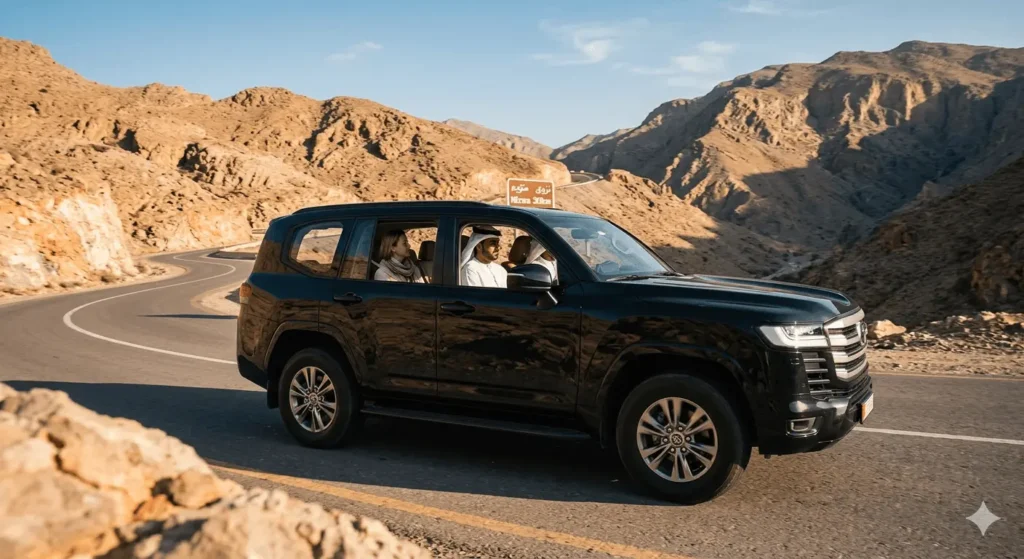
The exact numbers depend on which route you take and where in each city you start and finish, but here is a realistic range based on the two main crossings used by travellers today.
| Detail | Al Wajajah Route (via Al Ain) | Hatta–Mahdah Route |
| Total distance | ≈ 420–450 km | ≈ 450–470 km |
| Driving time (moving only) | 4.5 – 5.5 hours | 5 – 6 hours |
| Typical border wait | 20 – 60 minutes | 20 – 60 minutes |
| Realistic door-to-door time | 5 – 6.5 hours | 5.5 – 7 hours |
| Road character | Fast desert highway, mostly flat | Winding mountain road, more scenic |
On a quiet weekday you can comfortably do the trip inside 6 hours including the crossing. On public holidays, Eid, or long weekends, border queues can add well over an hour, so it’s worth checking current wait times the morning you travel and building in a buffer, especially if you have a flight to catch at Dubai International Airport after you arrive.
Best Routes from Muscat to Dubai by Car

There are two practical ways to drive between the two cities. Both are fully paved, well signposted, and used daily by residents, tourists, and cross-border freight — this is not an off-road journey.
Route 1: Muscat → Sohar → Al Wajajah → Al Ain → Dubai
This is the most direct and most heavily used route, and the one most private transfer companies default to. From Muscat, you join Oman’s Route 1 (the Batinah Coastal Highway) north-west through Barka and Sohar, then cut inland to the Al Wajajah / Al Ain border post. Once you clear immigration you’re back on UAE tarmac, joining the E66/E11 corridor through Al Ain and on to Dubai via Abu Dhabi’s northern approach roads. The road is wide, well-lit, and largely flat, which makes it the faster and less physically tiring option — a good pick if you’re travelling with young children, elderly passengers, or simply want to arrive fresh.
Route 2: Muscat → Sohar → Hatta → Dubai
The alternative crossing takes you from Sohar toward the Hatta–Mahdah border post, then down through Hatta’s dramatic mountain scenery straight into eastern Dubai. It adds roughly 30–45 minutes to the overall journey compared with the Al Wajajah route, but it’s the more scenic option — you’ll pass reservoirs, rocky wadis, and the Hajar range up close. If you have time to spare and want to stop for photos, this route (and a possible detour into Hatta itself) is worth considering.
Which route should you choose?
- Choose Al Wajajah / Al Ain if you want the fastest, flattest, most predictable drive.
- Choose Hatta if you have extra time and want mountain scenery along the way.
- Both routes converge on Dubai’s main highway network, so onward transfers to Dubai Marina, Downtown, JBR, or Business Bay take a similar amount of time either way.
For a deeper breakdown of the wider UAE–Oman road network, including drives to Sohar, Nizwa, and Salalah, see our companion guide: Dubai to Oman Distance, Drive Time & Route Guide.
Border Crossing Guide: Documents, Process & Fees

Crossing an international land border is the one part of this trip that catches self-drivers off guard. Here’s what to expect and what to prepare in advance.
Documents you’ll need
- Passport valid for at least six months from your travel date.
- Valid visa or entry permit for the country you’re entering — requirements differ by nationality, so check before you travel.
- Vehicle registration card for the car you’re driving.
- Cross-border vehicle insurance — standard UAE or Oman motor insurance usually doesn’t cover the other country automatically; you’ll need a supplementary cross-border policy or certificate arranged in advance.
- Driving licence valid in both countries (most GCC and many international licences qualify — confirm yours does).
What happens at the crossing
- Arrive at the Omani exit post, park, and take your passport (and vehicle documents, if self-driving) into the immigration building for an exit stamp.
- Pay the Omani exit fee — a small per-person charge, generally payable in cash (Omani Rials), though card is often accepted too.
- Drive through the short stretch of no-man’s-land between the two posts.
- Clear UAE entry immigration: passport check, entry stamp, and — if self-driving — a check of your vehicle’s cross-border insurance.
- Continue your journey on UAE roads toward Dubai.
Processing on both sides together typically takes 20 minutes to just over an hour, depending on how busy the post is. Weekday mornings tend to move fastest; Thursday afternoons, Fridays, and public holidays are the busiest times to avoid if your schedule allows it.
| A note on timingBorder procedures, fees, and document requirements can change with little notice, so always confirm current rules for your nationality shortly before you travel rather than relying solely on this guide. If you’d rather not manage any of this yourself, a chauffeur-driven transfer handles the paperwork and the queue on your behalf. |
Self-Drive vs Private Chauffeur Transfer
Once you understand the route and the border process, the real decision is how you want to make the trip. Here’s an honest comparison.
| Factor | Self-Drive (Rental Car) | Private Chauffeur Transfer |
| Cross-border insurance | You arrange it yourself in advance | Handled by the operator |
| Border paperwork | You manage documents and queue in person | Chauffeur assists and knows the process |
| Route knowledge | You navigate; risk of wrong turns | Local driver knows both routes well |
| Fatigue after 5+ hours | You do all the driving | You rest, work, or sleep in the back seat |
| Pricing | Rental + fuel + tolls + insurance add up | One fixed, all-inclusive quote |
| Flexibility to stop | Fully in your control | Can be arranged with your driver in advance |
Self-driving gives you full control of your schedule, which suits confident road-trippers who enjoy the drive itself. But for business travellers, families with young children, or anyone who simply wants a stress-free door-to-door journey, a private chauffeur service between Dubai and Oman removes the insurance paperwork, the navigation, and five-plus hours of concentrated driving from your day.
Why Book a Muscat to Dubai Private Transfer with GH Trips Dubai

GH Trips Dubai runs dedicated cross-border chauffeur transfers between the UAE and Oman, including door-to-door service on the Dubai to Muscat route. Here’s what that includes:
- Fixed, all-inclusive quote covering the vehicle, chauffeur, fuel, tolls, and cross-border insurance — confirmed in writing before you travel.
- RTA-approved, English-speaking chauffeurs experienced with both the Al Wajajah and Hatta crossings.
- A choice of vehicles from comfortable sedans to spacious SUVs and vans for families or groups — browse the full fleet.
- Door-to-door convenience — pickup from your Muscat hotel or residence, drop-off anywhere in Dubai, including a direct airport transfer if you’re flying onward.
- 24/7 availability, with support for early-morning departures and last-minute bookings.
To check pricing or lock in a date, get in touch with our team, or read more about GH Trips Dubai and how we run our cross-border service.
Tips for a Smooth Muscat to Dubai Road Trip
- Fill the tank before the border — fuel prices and station spacing differ slightly between the two countries.
- Travel with printed and digital copies of your passport, visa, and insurance documents in case of connectivity issues at the post.
- Cross on a weekday morning if your schedule allows it — queues are noticeably shorter than on Thursday afternoons, Fridays, and holidays.
- Keep small Omani Rial cash on hand for the exit fee, even if you expect to pay by card.
- Download offline maps for the stretch between the border posts, where mobile signal can be patchy.
- If you’d rather explore Oman’s mountains and dunes without driving yourself the whole way, pair your trip with a desert safari once you’re back in Dubai.
Frequently Asked Questions
How far is Muscat from Dubai by road?
Depending on the route, the distance is roughly 420–470 km, translating to a moving drive time of around 4.5 to 6 hours.
How long does the border crossing take?
Most travellers clear both sides of the border in 20 minutes to just over an hour. Public holidays and weekends can push this higher.
Do I need a visa to drive from Muscat to Dubai?
Requirements depend on your nationality. Check current UAE and Oman entry rules for your passport well before you travel, since policies can change.
Can I use my UAE rental car insurance in Oman?
Usually not automatically. Standard rental insurance is typically valid only in the country of registration, so you’ll need a cross-border insurance certificate or an add-on policy before crossing.
Is it cheaper to self-drive or book a private transfer?
Self-driving can look cheaper on paper, but once you add rental fees, fuel, tolls, and cross-border insurance, the gap narrows — and a private transfer gives you a single fixed price with no surprises and no driving fatigue.
Which route is better for families with children?
The Al Wajajah / Al Ain route is generally the more comfortable choice for families, thanks to its flatter, faster highway. See our Dubai to Muscat car with driver page for family-friendly vehicle options.
Ready to Book Your Muscat to Dubai Transfer?
Whether you’re travelling for business, a family holiday, or heading straight to the airport, GH Trips Dubai can arrange a fixed-price, chauffeur-driven transfer between Muscat and Dubai with all border paperwork handled for you. Contact our team for a quote, or explore our full range of cross-border chauffeur services across the UAE and Oman.
One Response