

Salalah is one of Arabia’s most surprising places: a lush, tropical corner of Oman where monsoon rains turn the hills emerald green, waterfalls flow, and the beaches are spectacular. Getting there from Dubai, though, is a serious undertaking. This isn’t a quick hop like Nizwa or Muscat, Salalah sits in Oman’s deep south, well over a thousand kilometres away, and the overland journey is a real expedition. The good news is that, done right, that journey can be part of the adventure, and a private transfer makes the long haul genuinely comfortable.

This complete guide covers the Dubai to Salalah journey by road: the real distance and drive time, an honest road-versus-flight comparison, the route and border crossing, visa essentials, whether to split the drive over two days, and why a private car with driver transforms such a long trip. We’ll be straight with you about when flying makes more sense, too. Because border and visa rules depend on nationality and can change, always confirm the current requirements through official Omani channels before you travel.
Why Salalah Is Worth the Journey
Salalah, the capital of Oman’s southern Dhofar region, is unlike anywhere else in the Gulf. It’s most famous for the Khareef, the summer monsoon (roughly late June to September) that drapes the mountains in mist and greenery and draws visitors from across the region escaping the heat. Year-round, it offers gorgeous Arabian Sea beaches, the dramatic blowholes at Al Mughsail, the waterfalls and green valleys of Wadi Darbat, coconut and banana plantations, frankincense heritage, and lively souks. It’s a genuinely different side of Arabia, and for many it’s worth every kilometre.
Dubai to Salalah: Distance & Drive Time
Let’s be clear about the scale, because it surprises people. By the shorter inland route, Dubai to Salalah is roughly 1,200 to 1,300 kilometres, and that’s the direct way. Continuous driving time is around 12 to 16 hours, and once you add the border crossing, rest stops, meals, and fuel, a realistic door-to-door figure is closer to 14 to 18 hours. There’s also a much longer coastal route (around 1,900 km and 20-plus hours) that few take. In practical terms, this is not a one-sitting drive for most people, it’s either a very long single day with a fresh driver, or, better, a journey split over two days.
Road vs Flight: An Honest Comparison

When to fly
We’ll be honest: for many travellers, flying is the sensible choice for Salalah. A direct flight from Dubai takes around two hours, and even with airport time it’s roughly five to six hours door-to-door, against a full day or two on the road. If your time is limited, you’re not keen on long drives, or you only have a short break, flying is faster, easier, and less tiring, and you can always arrange a car once you arrive. There’s no shame in flying a 1,200 km journey.
When the road wins
So why drive? Because the road offers things a flight can’t. It’s an adventure in itself, with desert, mountains, and changing landscapes you simply teleport over when flying. It offers total flexibility, your own schedule, stops where you like, and side trips along the way. For families and groups it can be better value, since a private vehicle is one fixed price rather than several airfares, and you arrive with your own transport and luggage, no rental needed. And for travellers who love a road trip, the journey is the point. If that’s you, the road is a wonderful, memorable choice, and a private driver makes it viable.
The Route: How the Drive Actually Goes
The fastest route runs inland. From Dubai you head to Al Ain (around an hour and a half), cross into Oman at the Mezyad-Hafeet border, then join Oman’s Route 31, which carries you south through Haima and Thumrait to Salalah. The first stretch near the mountains around Nizwa is scenic, but be warned: much of Route 31 is long, straight, empty desert highway, hundreds of kilometres of flat, sparse landscape with few towns or attractions. The roads are excellent and well-maintained, but the emptiness is real, and one long stretch (around Haima to Thumrait) can run a few hours with no fuel, so stops must be planned. This is exactly the kind of route where a driver who knows it pays off.
The Border Crossing

For Salalah, the Mezyad-Hafeet crossing near Al Ain is the standard gateway. You’ll be stamped out of the UAE and complete Omani entry, with the usual vehicle and document checks. Under normal conditions it’s straightforward, but borders get busy during weekends and the summer and winter holiday peaks (Khareef season especially), so an early start and some patience help. With a private transfer, your driver handles the vehicle paperwork and guides you through, removing the part of the trip travellers worry about most.
Visa & Documents
Entry requirements depend on your nationality and residency, so check carefully in advance:
- Passport valid for at least six months from your travel date
- An Oman visa if required: UAE residents typically need one (often via the official Oman eVisa system, commonly around 5 OMR for a short stay), while some nationalities and GCC citizens have different rules
- For some UAE residents, Oman entry can be profession-linked, so verify your eligibility in advance
- Confirmation of any UAE exit fee at the border
Rules change, so always verify the current requirements through the official Royal Oman Police / Oman eVisa portal before booking, and never assume visa-on-arrival without checking. With a private transfer, the vehicle’s own cross-border permits and insurance are handled for you, you only manage your personal documents.
Should You Split It Over Two Days?
For most travellers, yes, splitting the drive is the smarter, safer approach. Driving 1,200-plus kilometres in one go is genuinely tiring and, done solo, risky (fatigue is the biggest danger on this route). Breaking the journey with an overnight stop, often around the Nizwa or central Oman area, makes it far more comfortable and lets you enjoy a sight or two en route. With a private chauffeur, the driver manages the distance professionally, but even so, a two-day approach turns a marathon into a pleasant journey, and many travellers build the drive itself into a longer Oman road trip taking in Muscat, Nizwa, and more.
Why a Private Transfer for Such a Long Drive
On a haul this long, a private transfer isn’t just comfortable, it’s the sensible way to do it. A professional driver means no fatigue at the wheel for you, the single biggest safety factor on a 1,200 km desert route, and someone who knows exactly where to fuel up on the long empty stretches and how to handle the border. Your vehicle is fully permitted for Oman travel (most Dubai rental cars aren’t, and rentals need extra certification to cross), and you can relax, sleep, or take in the scenery the whole way. For families and groups it’s also one fixed price for the vehicle. You can arrange a Dubai to Salalah car with driver for exactly this, and read our wider Dubai to Oman route guide for the full route picture.
What to Expect Along the Way
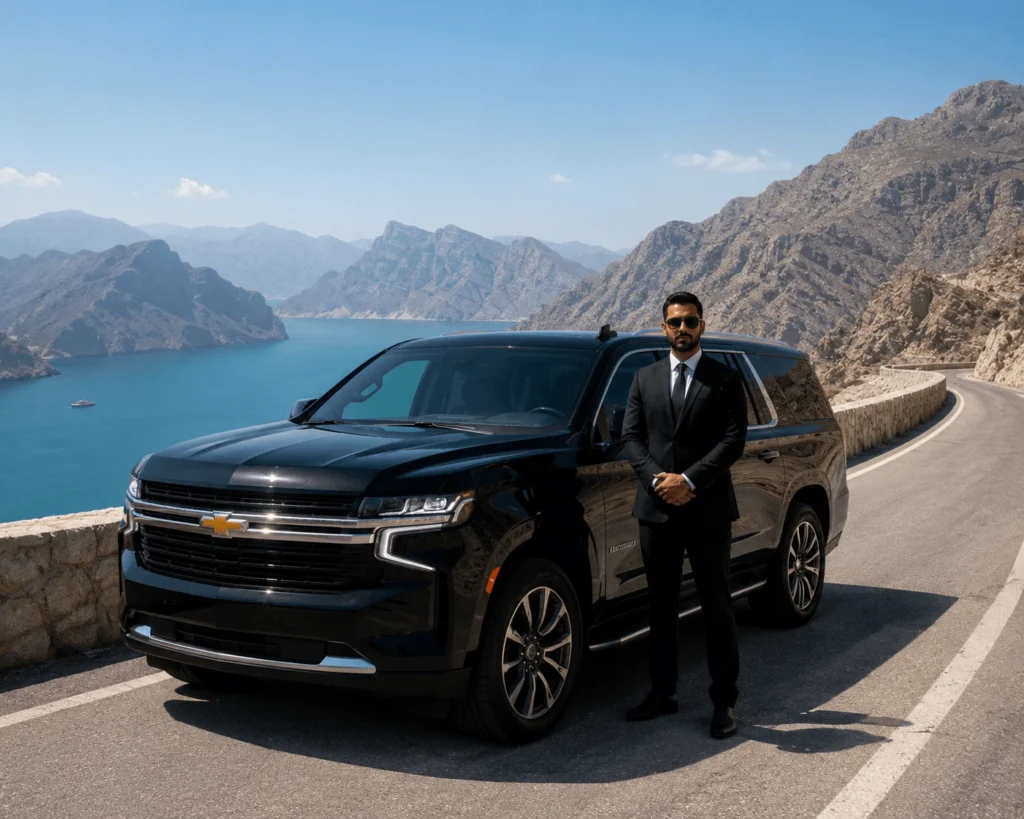
Set your expectations for a journey of contrasts. The early stretches through the UAE and northern Oman, with the Hajar Mountains, are scenic and engaging. Then comes the long middle: hour after hour of vast, empty, beautiful desert on Route 31, peaceful and meditative for some, monotonous for others, so bring entertainment, music, and podcasts. Services thin out dramatically, so fuel, food, and rest stops are planned rather than spontaneous. Then, as you approach Dhofar, the landscape transforms, especially in Khareef, into something green and tropical that feels a world away from where you started. That contrast is part of what makes the drive special.
Best Time to Go: The Khareef Season
Salalah’s headline season is the Khareef (roughly late June to early September), when monsoon rains transform the Dhofar mountains into lush green slopes with waterfalls and mist, a unique spectacle in Arabia and a magnet for regional visitors escaping the summer heat. It’s magical, but it’s also peak season, so expect busy roads, crowded borders, and hotels booking up well ahead, plan early. Outside Khareef, Salalah is quieter, sunnier, and still beautiful, with its beaches and sights on full display, and the drive is less crowded. Either way, the cooler months are most comfortable for the journey itself.
Tips for the Journey
- Sort your Oman visa well in advance through official channels if required
- Strongly consider splitting the drive over two days, or ensure a fresh, professional driver
- Start early to ease the border and maximise daylight driving
- Plan fuel stops, especially the long Haima-to-Thumrait stretch, don’t run low
- Carry plenty of water, snacks, and entertainment for the long empty sections
- Book Salalah hotels far ahead for Khareef season
- Download offline maps, as signal can drop on remote stretches
- Avoid unnecessary night driving on unfamiliar desert roads
Frequently Asked Questions
Q: How far is Salalah from Dubai by road?
A: By the shorter inland route, Dubai to Salalah is roughly 1,200 to 1,300 km. Continuous driving is about 12 to 16 hours, or around 14 to 18 hours door-to-door with the border, fuel, and rest stops. A longer coastal route (around 1,900 km) exists but is rarely used.
Q: Is it better to drive or fly from Dubai to Salalah?
A: It depends on your priorities. Flying is far faster (about two hours, or five to six door-to-door) and easier, the realistic choice if time is short. Driving takes a day or two but offers adventure, flexibility, stops, and better value for families and groups. For road-trip lovers, the journey is the appeal.
Q: How long does the Dubai to Salalah drive take?
A: Around 12 to 16 hours of continuous driving on the inland route, and realistically 14 to 18 hours door-to-door once you add the border crossing, fuel, and rest stops. Many travellers split it over two days with an overnight stop for comfort and safety, rather than driving it in one go.
Q: What route do you take from Dubai to Salalah?
A: The fastest is the inland route: Dubai to Al Ain, across the Mezyad-Hafeet border, then Oman’s Route 31 south through Haima and Thumrait to Salalah. The roads are excellent, but much of Route 31 is long, empty desert with sparse fuel, so stops must be planned.
Q: Do I need a visa to drive from Dubai to Salalah?
A: It depends on your nationality and residency. UAE residents typically need an Oman visa (often via the eVisa system, commonly around 5 OMR for a short stay), while GCC citizens and some nationalities have different rules. You’ll need a passport valid six-plus months. Always confirm current requirements through official Omani channels.
Q: When is the best time to visit Salalah?
A: The famous Khareef monsoon season (roughly late June to early September) turns Dhofar green with waterfalls and mist, it’s spectacular but very busy, so book ahead. Outside Khareef, Salalah is quieter and sunnier with its beaches and sights on show, and the cooler months are most comfortable for the long drive.
Final Word: The Long Way to a Special Place
Salalah is a reward at the end of a long road, a green, tropical, beach-fringed corner of Arabia that feels like a different country from Dubai. Flying is the quick, easy option, and for many trips it’s the right one. But if you have the time and love the open road, the overland journey, vast deserts giving way to misty green hills, is an adventure in itself, and a private transfer is what makes 1,200-plus kilometres comfortable and safe, with the driving, the fuel stops, and the border all handled for you. Choose the way that suits your trip, and Salalah will be worth it.To plan your journey, you can book a Dubai to Salalah car with driver, read our full Dubai to Oman route guide, arrange a multi-stop Oman chauffeur service that builds in overnight stops, or contact our team to tailor a Salalah road trip around your plans.