

The drive from Dubai to Salalah is one of the great road trips of the region, but it’s also a serious distance, so good planning makes all the difference. How long does it really take? Which route should you follow? And where should you stop to refuel, rest, eat, or stay overnight? Get those answers right and the long haul through Oman’s deserts becomes smooth and enjoyable rather than daunting. Get them wrong, and you risk running low on fuel in the middle of nowhere or arriving exhausted.

This guide breaks down the Dubai to Salalah journey in practical detail: the realistic total travel time, the recommended route, a leg-by-leg timing breakdown, and, most usefully, the best stops along the way for fuel, food, rest, and an overnight break. For the full border procedure and visa requirements, see our dedicated guides; here we focus on time, route, and stops. Figures are realistic estimates that vary with conditions, so always allow a buffer and check live conditions on the day.
How Long Does Dubai to Salalah Take?
By the recommended inland route, Dubai to Salalah is roughly 1,220 to 1,290 kilometres. Pure driving time is around 12 to 14 hours, and a realistic door-to-door figure, once you add the border crossing, fuel stops, meals, and rest breaks, is closer to 14 to 16 hours. That’s a very long day by any measure, which is why many travellers split the drive over two days with an overnight stop (more on that below). There’s also a longer coastal route of around 1,900 km that takes 20-plus hours, scenic but rarely chosen for a direct trip.
The Recommended Route
The fastest and most popular route runs inland via Al Ain. In short: Dubai → Al Ain → Mezyad (Hafeet) border → Nizwa area → Haima → Thumrait → Salalah, almost all of the Oman section along Route 31. From Dubai you drive to the Al Ain area and cross into Oman at the Mezyad-Hafeet border, then pick up Route 31, which runs nearly the length of the country south to Salalah. The early Oman stretch near Nizwa and the Hajar Mountains is the scenic highlight; after that, it’s long, open desert highway most of the way. The roads are excellent and well-signed throughout. (For full border and visa detail, see our Dubai to Oman route guide.)
Travel Time, Leg by Leg
Here’s a realistic breakdown of the inland route to help you plan (timings are approximate and exclude long stops):
- Dubai to the Al Ain / Mezyad-Hafeet border: about 160 km, roughly 1 hour 50 minutes
- Border crossing: typically 20–40 minutes, but add 1–3 hours on busy weekends and holidays
- Border to the Nizwa area: about 250 km, the scenic Hajar Mountains stretch, the ‘heart’ of the drive
- Nizwa to Haima: about 380 km of flat, remote desert highway (two lanes, narrowing near Haima)
- Haima to Thumrait: a long, sparse stretch, around three hours with the fewest services
- Thumrait to Salalah: about 100 km, with a military checkpoint and camels near the city, slow down
Add it together and you can see how the hours mount up, and why fuel and rest stops need planning rather than luck.
What Affects Your Travel Time
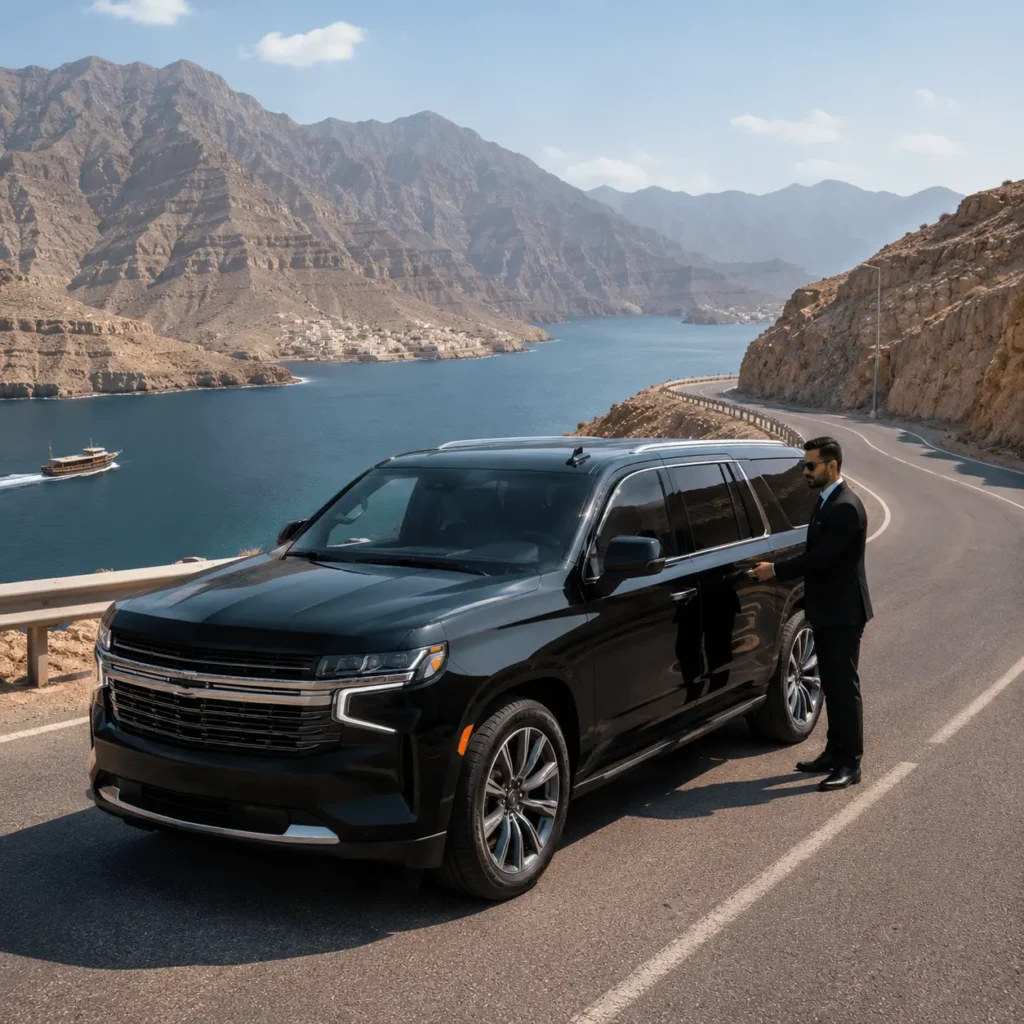
Your real-world time depends on several things. The border is the biggest variable, quick on a quiet weekday, but potentially adding hours during weekends, Eid, and the busy Khareef season. Your number and length of stops matters: a quick-as-possible run is very different from a relaxed drive with photo and meal breaks. Season plays a part too, peak periods mean busier roads and borders. And whether you drive straight through or split over two days changes everything. Building in a sensible buffer is always wise on a journey this long.
The Best Stops Along the Way
Nizwa: the ideal overnight and fuel stop
If you split the drive, Nizwa is the best place to break it. It’s far enough in to make the second day manageable, has plenty of hotels you can book in advance, and offers genuine sightseeing, the magnificent Nizwa Fort and its traditional souq, so your overnight doubles as a highlight. Crucially, Nizwa is also the place to fill your tank completely before heading south onto Route 31, where fuel becomes sparse. An afternoon arrival lets you explore the fort and souq before an early start the next morning.
Birkat Al Mouz & around Nizwa
For something more atmospheric, the village of Birkat Al Mouz, about 30 minutes from Nizwa, makes a charming alternative base, known for its abandoned mud-brick houses, date plantations, and falaj channels. The wider area, including Bahla with its UNESCO fort and Jabreen Castle, is rich in sights if you have time. Staying around Nizwa rather than pushing on lets you enjoy a slice of Oman’s interior heritage as part of the journey.
Ibri and Adam
Along the earlier Oman stretch you’ll pass towns like Ibri, known for its ancient forts and souqs, and the small, relaxed desert town of Adam, often considered the last proper town before the long, empty run south. They make handy spots for a quick break, a coffee, or a leg-stretch, and a chance to glimpse everyday Omani life before the desert takes over.
Haima: the desert refuel point
Haima sits in the heart of the desert and is the key refuelling and rest stop on the long middle section. It’s not pretty or touristy, its hotels are basic and generally can’t be booked online, but it’s a vital, reliable place to refuel, eat, and rest. Most travellers treat Haima as a functional pit stop rather than an overnight (Nizwa is the nicer choice for that), but if you’re driving the coastal route or running late, it’s a useful fallback for a basic night’s rest.
Thumrait: the last town before Salalah
Thumrait is the final town before you reach Salalah, roughly 100 km out. It’s a good last stop to refuel, grab refreshments, and prepare for the home stretch into Dhofar, where, especially in Khareef, the desert dramatically gives way to green. After Thumrait, watch for the military checkpoint and for camels wandering onto the road near Salalah, a sign you’ve almost arrived.
Fuel Stops: Where to Fill Up
Fuel planning is the single most important practical part of this drive. The golden rules:
- Fill up completely in Nizwa before heading south onto Route 31
- Refuel at Haima, which for most vehicles will get you close to Salalah
- Between Haima and Thumrait is the longest gap (around three hours), so don’t let your tank run low here
- After Haima there are a few stations before Thumrait, but spacing is wide, so top up when you can
- Carry cash (Omani rials), as some petrol stations may not accept cards
- Petrol in Oman is inexpensive, so topping up early is cheap insurance
One Day or Two? Planning Your Timing

For most travellers, splitting the journey over two days is the smarter, safer plan. Driving 1,200-plus kilometres in a single day is genuinely exhausting, and fatigue is the biggest danger on the long, monotonous desert stretches. A common approach is to drive Dubai to Nizwa on day one (around five to six hours, with an afternoon exploring Nizwa), then Nizwa to Salalah on day two (a long but manageable run with an early start). If you must do it in one go, leave very early, share the driving or use a professional driver, and avoid arriving in the dark. With a private chauffeur, the driver manages the distance and timing professionally, and a two-day plan can fold in real sightseeing.
Road Conditions to Know About
The roads are excellent and well-maintained, but a few things are worth knowing. Much of Route 31 is two-lane highway that narrows to a single shared lane near Haima, so overtaking needs care, especially with the many large trucks. Strong crosswinds are common on the open desert stretches. Services and repair options are sparse once you’re deep into Route 31, so a well-maintained vehicle matters. And night driving is best avoided, the roads can be unlit, crosswinds pick up, and camels stray onto the road, particularly near Salalah, so daylight driving is far safer.
Why a Driver Makes the Timing Work
On a drive this long and remote, a private driver takes the pressure off the timing entirely. A professional who knows the route plans the fuel stops precisely (vital on the sparse stretches), paces the journey to avoid fatigue, times the border to dodge the worst queues, and keeps you to daylight driving for safety. You’re free to rest, eat, and enjoy the scenery rather than watching the fuel gauge and the clock. The vehicle is fully permitted for Oman, and on a two-day plan the driver can build in your Nizwa overnight seamlessly. Arrange a Dubai to Salalah car with driver, or an Oman chauffeur service that can include a stop in Nizwa en route.
Tips for Timing the Journey
- Start early, ideally before dawn, to ease the border and maximise daylight driving
- Plan to break the drive in Nizwa rather than pushing through in one exhausting day
- Fill up at every sensible opportunity, especially before the Haima-Thumrait stretch
- Avoid weekends and major holidays at the border if you can, or allow extra hours
- Don’t drive at night on the remote stretches, camels, winds, and fatigue make it risky
- Carry water, snacks, cash, and a charged phone with offline maps downloaded
- Build in a buffer, this is a journey where rushing the timing is a false economy
Frequently Asked Questions
Q: How long does it take to drive from Dubai to Salalah?
A: By the inland route (around 1,220 to 1,290 km), pure driving is about 12 to 14 hours, and realistically 14 to 16 hours door-to-door with the border, fuel, and rest stops. Many travellers split it over two days with an overnight in Nizwa, as driving it in one go is very tiring.
Q: What is the best route from Dubai to Salalah?
A: The fastest is the inland route: Dubai to Al Ain, across the Mezyad-Hafeet border, then Route 31 via the Nizwa area, Haima, and Thumrait to Salalah. It’s well-maintained throughout, with the scenic highlight near Nizwa and the Hajar Mountains, followed by long desert stretches.
Q: Where should I stop on the Dubai to Salalah drive?
A: Nizwa is the best overnight and fuel stop, with hotels and sightseeing (fort and souq). Birkat Al Mouz is an atmospheric alternative nearby. Ibri and Adam suit quick breaks, Haima is the key desert refuel point, and Thumrait is the last town before Salalah.
Q: Where do I refuel between Dubai and Salalah?
A: Fill up completely in Nizwa before heading south on Route 31, then refuel at Haima. The longest gap is Haima to Thumrait (around three hours), so don’t run low there. A few stations follow before Thumrait. Carry cash, as some pumps may not take cards.
Q: Should I drive Dubai to Salalah in one day or two?
A: Two days is safer and more comfortable for most people. A common plan is Dubai to Nizwa on day one (with an afternoon exploring), then Nizwa to Salalah on day two. If driving in one go, start very early, share the driving or use a professional driver, and avoid arriving after dark.
Q: Is it safe to drive to Salalah at night?
A: It’s best avoided on the remote stretches. The desert roads can be unlit, strong crosswinds pick up, and camels wander onto the road, especially near Salalah. Daylight driving is far safer, which is another reason to plan your timing and stops carefully, or use an experienced driver.
Final Word: Plan the Stops, Enjoy the Drive
Dubai to Salalah is a long but genuinely rewarding drive, and the secret to enjoying it is planning the timing and the stops rather than just setting off. Know the realistic hours, follow the inland route, break the journey in Nizwa, and refuel religiously at Nizwa, Haima, and Thumrait, and the long desert miles become a smooth, memorable adventure. Plan well, drive in daylight, and leave the fuel maths and the timing to someone who knows the road, and Salalah will be a reward well worth the journey.To plan a well-timed trip, you can book a Dubai to Salalah car with driver, read our detailed Dubai to Oman route guide, arrange an Oman chauffeur service with a Nizwa overnight built in, or contact our team to tailor your Salalah route and timing.