

Behind the skyscrapers and superlatives lies another Dubai entirely, one of wind-tower houses, narrow sand-coloured lanes, spice-scented souks, and a creek where wooden boats have ferried traders for generations. This is Old Dubai, the heritage heart that travel writers and guidebooks consistently single out as the city’s most characterful side, and it’s a revelation for anyone who thinks Dubai is all glass and gold.
This guide is your route through Old Dubai, the Al Fahidi historical neighbourhood, the creek and its abras, the gold and spice souks, and the heritage districts along the water, explored at a relaxed pace with a private driver between each stop. We’ll cover what to see, a suggested itinerary, and practical tips, and explain why a chauffeur makes a heritage day so much smoother. If you’re drawn to culture over skyscrapers, this is the Dubai to seek out. A quick note: some sites are being restored and hours vary, so check current details before you go.
Why Old Dubai Deserves a Day of Its Own
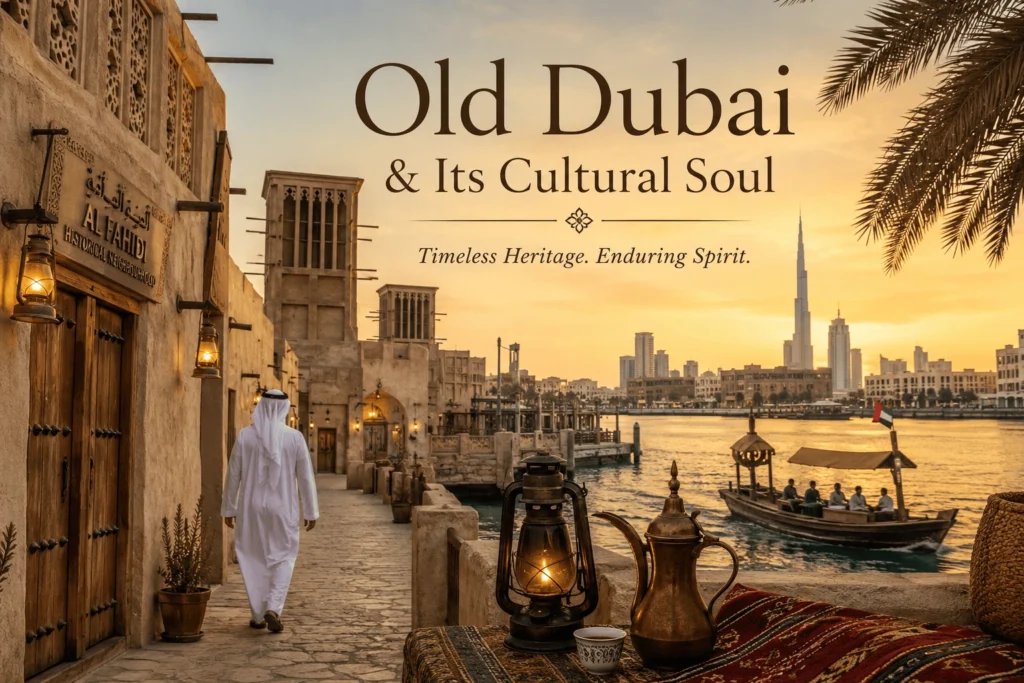
Most visitors rush through Old Dubai in an hour between modern attractions, and miss its quiet magic entirely. Given proper time, it tells the story of how a small pearling and trading settlement on the creek became the city you see today. The contrast with Downtown is the whole point: where the new city dazzles, the old city charms, with human-scale lanes, traditional architecture, genuine craft and commerce, and a slower rhythm. For culture-focused travellers, it’s often the most memorable part of a Dubai trip.
Why Explore It with a Chauffeur
Old Dubai’s sights are spread across both banks of the creek, Bur Dubai on one side, Deira on the other, plus the heritage districts of Al Seef and Al Shindagha, and the old quarters are dense, with limited and awkward parking. That makes self-driving fiddly and a string of taxis inconvenient. With a chauffeur, your driver drops you at one end of a walking route and meets you at the other, so you explore the lanes and souks on foot without backtracking, then ride in cool comfort to the next district. It turns a logistically tricky area into an effortless, unhurried day. Our Dubai city tour can be tailored entirely around Old Dubai.
Al Fahidi Historical Neighbourhood

Wind towers and winding sikkas
The jewel of Old Dubai is the Al Fahidi Historical Neighbourhood, also known as Al Bastakiya. This beautifully restored quarter of sand-coloured houses is famous for its barjeel, the traditional wind towers that channelled breezes to cool homes long before air conditioning. Wandering its narrow sikkas (alleyways) and stepping into hidden courtyards is the best way to experience it, and it’s free to explore on foot. The contrast with the skyline visible beyond is striking, and the whole area is wonderfully photogenic.
Museums, galleries & the Coffee Museum
Al Fahidi is dotted with small museums and art spaces, many free to enter. The district sits beside Al Fahidi Fort, the city’s oldest building, which houses the Dubai Museum (note that it has been undergoing restoration, so check whether it has reopened before relying on a visit). Don’t miss the charming Coffee Museum, a fragrant 15-to-20-minute stop tracing brewing traditions with a tasting of cardamom-spiced qahwa, and curated galleries like XVA and the Majlis Gallery, ideal for discovering contemporary Emirati art and calligraphy.
Cultural meals and understanding
For deeper insight, the Sheikh Mohammed Centre for Cultural Understanding (SMCCU) in Al Fahidi runs cultural meals and guided sessions under its ‘open doors, open minds’ ethos, where you can share a traditional Emirati meal and ask anything about local life, customs, and faith. Pair it with a traditional breakfast or lunch at the atmospheric Arabian Tea House, set in a leafy courtyard, for a genuinely cultural midday break.
The Dubai Creek & the Abra Crossing
The Dubai Creek is the historic spine of the city, the saltwater inlet that separates Bur Dubai from Deira and was the original trading hub. The quintessential Old Dubai experience is crossing it aboard an abra, a small traditional wooden boat, for just a dirham or two. It’s a short, breezy ride with wonderful views of both the old waterfront and the modern skyline beyond, and it’s been the everyday way across the water for generations. A crossing at dusk, with the lights coming on along the water, is especially atmospheric. Your driver can drop you at one abra station and collect you across the creek.
The Souks: Gold, Spice & Textiles
On the Deira side, reached easily by abra, lie Old Dubai’s famous souks. The Gold Souk is dazzling, lane after lane of shop windows heaped with intricate jewellery, and a spectacle even if you’re only window-shopping. Nearby, the Spice Souk fills the air with saffron, cinnamon, dried lemons, and frankincense, a feast for the senses. Back on the Bur Dubai side, the Textile Souk and the Meena Bazaar area, sometimes called ‘Little India’, overflow with fabrics, pashminas, and crafts. Haggling is expected and part of the fun, so browse, bargain, and enjoy the theatre of it.
Al Seef & Al Shindagha
Two more creekside districts round out Old Dubai. Al Seef is a modern, heritage-inspired promenade along the water, blending traditional-style architecture with cafes, shops, and restaurants, a relaxed, pretty place to stroll and dine. A little further along, the Al Shindagha Historic District is home to heritage museums and the restored houses of Dubai’s ruling family, telling the story of the city’s pearling and seafaring past. Together they give context and comfort to a heritage day, and both are easy stops with a driver shuttling you between them.
A Suggested Old Dubai Itinerary
Here’s a relaxed half-to-full-day flow:
- Morning: start in Al Fahidi, wander the sikkas, visit the Coffee Museum and a gallery or two
- Mid-morning: a cultural session or breakfast at SMCCU or the Arabian Tea House
- Late morning: take an abra across the creek to Deira
- Midday: explore the Gold and Spice Souks, then the Textile Souk on the Bur Dubai side
- Afternoon: drive to Al Shindagha for the heritage museums
- Evening: finish at Al Seef for a creekside dinner as the lights come on
Tips for Visiting Old Dubai
- Dress modestly, this is a traditional area; covered shoulders and knees are respectful
- Go in the morning or late afternoon to avoid the midday heat in the open lanes
- Carry small cash for the abra, the souks, and tipping
- Haggle politely in the souks; start lower and settle on a fair price with a smile
- Wear comfortable shoes for the uneven, atmospheric old lanes
- Check opening hours and any restoration closures (such as the Dubai Museum) in advance
Frequently Asked Questions
What is there to do in Old Dubai?
Explore the Al Fahidi historical neighbourhood with its wind towers and museums, take an abra across Dubai Creek, browse the Gold, Spice, and Textile souks, share a cultural meal at SMCCU, and stroll the heritage districts of Al Seef and Al Shindagha. It’s the city’s cultural heart.
Is Al Fahidi worth visiting?
Yes. Al Fahidi (Al Bastakiya) is Dubai’s oldest restored neighbourhood, with traditional wind-tower architecture, narrow lanes, art galleries, museums, and cafes. It’s free to wander, deeply atmospheric, and a striking contrast to the modern city, a favourite of culture-focused travellers.
How much is the abra across Dubai Creek?
An abra (traditional wooden water taxi) crossing is famously cheap, just a dirham or two per person, paid in cash. It’s a short, scenic ride and one of the most authentic experiences in Old Dubai, used by locals and visitors alike.
Why explore Old Dubai with a chauffeur?
Old Dubai’s sights are spread across both banks of the creek and several heritage districts, with limited, awkward parking. A chauffeur drops you at one end of a walking route and meets you at the other, so you explore on foot without backtracking and travel between districts in air-conditioned comfort.
Is the Dubai Museum open?
The Dubai Museum, in Al Fahidi Fort, has been undergoing restoration, with visitors at times limited to viewing the exterior and the traditional dhow outside. Check the current status before planning a visit, and your driver or guide can adjust the route accordingly.
How long do I need for Old Dubai?
Allow at least a half day to do it justice, and a full day if you want to include cultural meals, multiple souks, and the Al Seef and Al Shindagha districts at a relaxed pace. A chauffeur makes covering the spread-out area in a day easy.
Final Word: Where Dubai’s Story Began
Old Dubai is where the city’s story began, and where its soul still lives, in the wind towers of Al Fahidi, the bustle of the souks, and the timeless rhythm of the creek. It’s the perfect counterpoint to the gleaming new city, and for many travellers it becomes the most cherished memory of their trip. Give it a proper day, explore it on foot, and let a driver handle the connections, and you’ll see a side of Dubai that the skyline crowd often misses.To explore the heritage city in comfort, you can book a heritage-focused Dubai city tour, arrange a flexible private chauffeur or full-day car with driver, or contact our team to build an Old Dubai itinerary around your interests.